Director of Product & AI Solutions | Principal Solutions Engineer

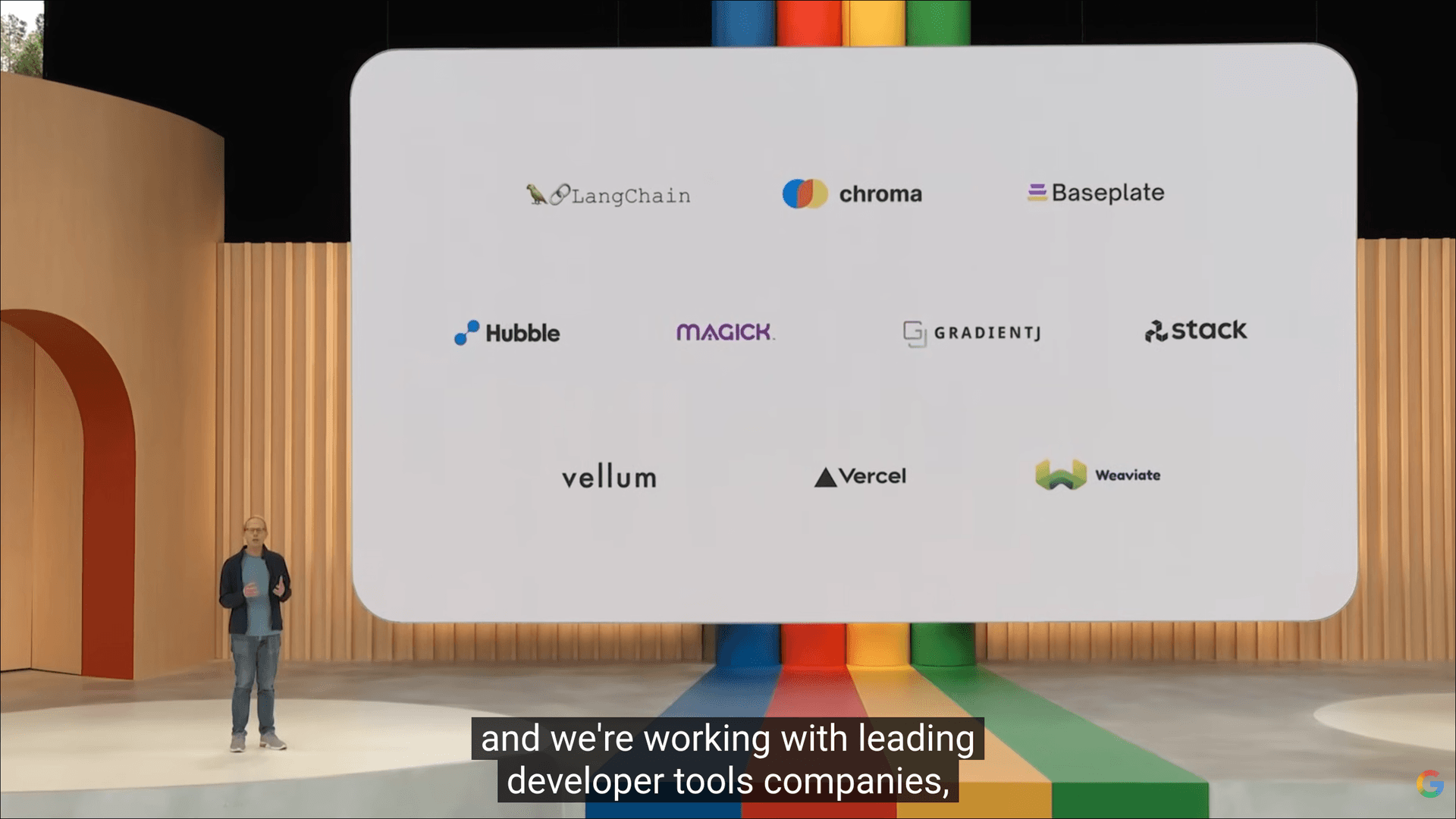
Led 300+ person teams • $100M+ budgets • Featured at Google I/O 2023 • Production LangChain at Scale

Jesse Alton

15+ Years Shipping Platforms, AI Agent Systems & Developer Tools

I'm a product executive and solutions engineer who ships production systems. Started my first business at 18, broke into tech through sales, and spent 15 years learning to code while building my career in product management. Eventually led Strategy & AI for 300+ person teams with $100M+ budgets across commercial and government agencies. I co-founded the Open Metaverse Interoperability Group in 2021—now a W3C working group. I've been working to bring the metaverse into existence since 2013 (my friends call me mrmetaverse for a reason). I also co-founded MagickML, which was featured at Google I/O 2023 alongside companies like LangChain and Vercel for early agent orchestration work. I was talking about AI agents and metaverse interoperability before they were mainstream. I learned to code because I wanted to ship what I designed, and I did: production LangChain systems, multi-tier RAG pipelines, model-agnostic orchestration. Today, I can take a product from capture through deployment. AI lets me ship production systems myself while bringing the strategic leadership most individual contributors don't have.

What I've shipped: Led platform strategy and hands-on engineering at Fearless contributing to $300M+ in government contracts (GSA, NARA, OPM, Login.gov with 100M+ users). Co-founded Magick ML—Magick was featured at Google I/O 2023 alongside companies like LangChain and Vercel for early agent orchestration work. Built production LangChain systems with multi-tier RAG, model-agnostic orchestration, and governance frameworks. 2,000+ commits in the last year. Zero security incidents across all deployments.

How I work: I operate at scale—led Strategy & AI for 300+ person organizations, directed $100M+ modernizations, contributed to $300M+ in captured government contracts. I'm technical enough to review PRs and architect systems. Product-minded enough to define roadmaps and align C-suite stakeholders. I navigate matrix organizations across procurement, security, and engineering without formal authority. I facilitate workshops that drive real decisions (Lightning Decision Jam, Service Blueprinting, OKRs). And now with AI, I can ship production systems myself—no 20-person team required.

What I bring: I've led 300+ person teams and I can write production code. I've closed $100M+ deals and I understand LangChain internals. I can align C-suite stakeholders and debug RAG pipelines. This combination is rare: most senior leaders can't ship code, and most engineers can't operate at organizational scale. AI changed the game—I can now ship production systems without massive teams while bringing strategic leadership experience most individual contributors don't have. If you need someone who operates at both levels, that's what I do.

Outside of work: Triathlete (Eagleman half ironman), archer who makes his own arrows and bows, new dad, small horse farm with my wife and three dogs. GrapheneOS user, drone pilot, Arch Linux (custom Hyprland configs), open-source advocate. The same discipline that gets you through 70.3 miles applies to shipping production systems and leading teams through hard problems.

TL;DR: The Resume in Brief

Current

  • Virgent AI — Founder & CEO (Jan 2024-Present)
  • Cadderly — Creator, multi-agent platform (Oct 2024-Present)
  • W3C OMI — Co-Chair (2021-Present)
  • MICA — Adjunct Faculty (2020-Present)

Experience Highlights

  • Fearless — Director of Strategy & AI, Sr. PM, Solutions Architect, BD (2020-2025)
  • Magick ML — Co-Founder, Google I/O 2023 (2022-2024)
  • AltonTech — Founder, 10+ years (2014-Present)
  • Dapt — CPO, advanced CMS (2018-2019)

Key Achievements

  • $300M+ in captured government/commercial business
  • Led 100+ projects, $100M+ modernization budgets
  • Project Featured at Google I/O 2023 (MagickML)
  • 2,000+ commits last year, production AI systems shipping
  • Zero security incidents across all deployments

Technical Skills

  • AI/ML: LangChain, RAG pipelines, multi-agent orchestration, MCP, A2A protocols, LoRA fine-tuning
  • Languages: TypeScript, Python, JavaScript
  • Frameworks: Next.js, React, Node.js, Three.js
  • Platform: PostgreSQL, Pinecone, AWS, Vercel Edge
  • Tools: Linux (Arch), Git, Docker, Cursor, Hyprland

Product & Leadership

  • Product strategy, roadmapping, OKR frameworks
  • Workshop facilitation (Lightning Decision Jam, Service Blueprinting)
  • Cross-functional leadership (PM/Eng/Design/Sales alignment)
  • Stakeholder management at scale (C-suite to engineering)
  • Matrix org execution without formal authority

Standards & Community

  • W3C OMI Co-Chair (4+ years, re-elected)
  • Open-source advocate (Magick ML, OMI, XR Showcase)
  • MICA Product Management Masters co-creator
  • 100+ students trained, 50+ technical blog posts
  • Community incubation (Angell XR → OMI → W3C)

Notable Projects

  • Cadderly: Multi-agent orchestration, short/medium/long-term memory triage, 30+ LLMs (including WebLLM!), A2A and MCP pioneer
  • Peake.ai: Built in 2 hours, 90% cost reduction
  • Financial Agent: $24K+ savings, 70% deflection
  • The Interop: Voice-to-publish CMS, 40+ articles
  • Login.gov: 100M+ users (via Fearless work)

Personal

  • Started first business at 18, built technical skills while scaling products
  • Led Strategy & AI for 300+ person teams, $100M+ budget experience
  • Full-cycle product ownership: capture → close → architecture → deployment
  • Triathlete (Eagleman half ironman completed)
  • Archer, fletcher, bowyer (crafts own arrows/bows)
  • GrapheneOS user, drone pilot, computer builder
  • New dad, small horse farm, three dogs
  • Arch Linux user, Hyprland configs, open-source advocate

Selected Work

Real projects. Real impact. Real innovation.

Maryland Institute College of Art (MICA)

Adjunct Faculty | Product Management & AI | 2020-Present

Teaching AI, Data Visualization, and Product Management to the next generation of creative technologists. Helped create the Product Management Masters program because the world needs more people who can bridge design, technology, and business. Courses include Product Management for Designers, Information Visualization, and AI Strategy.

5+ yearsTeaching experience
100+Students taught
MastersProgram co-creator

Program Development

Product Management Masters Program: Helped create MICA's MPS in Product Management—a 30-credit online graduate program designed for creative professionals. The program offers four flexible pathways including Digital Product Management and Luxury Goods & Experience Design. Can be completed in 15 months.

Curriculum Design: Developed courses bridging design thinking with technical product management. Focused on teaching designers how to think like product managers and product managers how to think like designers. The gap between these disciplines is where innovation happens.

Courses Taught

  • Product Management for Designers: Teaching designers how to think strategically about product development, user research, roadmapping, and cross-functional collaboration
  • Information Visualization & Data Visualization: Teaching how to communicate complex data through visual design, combining analytical thinking with aesthetic principles
  • AI Strategy & Implementation: Teaching creative professionals how to leverage AI tools in their practice and understand AI product development

Teaching Philosophy

I teach from real-world experience. Every workshop, every case study, every assignment comes from actual projects I've shipped. Students don't get theoretical frameworks—they get battle-tested methodologies that work in production. Lightning Decision Jams, Service Blueprinting, OKR frameworks, product roadmapping—all taught through doing, not lecturing.

Workshop-Driven Learning: My workshops actually drive change. The same facilitation techniques I use with Fortune 500 clients and government agencies work in classrooms. Students learn by facilitating real workshops, solving real problems, and shipping real work.

Impact & Outcomes

  • 100+ Students Trained: Graduate students and professionals learning product management, AI strategy, and data visualization
  • Program Co-Creation: Helped design Product Management Masters program now offered at prestigious art college
  • Career Advancement: Students moving into product roles at companies including Google, Adobe, and startups
  • Curriculum Innovation: Bridging design and technology in ways traditional business schools don't
  • Workshops & Training: Delivered AI workshops to non-profits, business owners, and university students

What This Demonstrates

Teaching at graduate level for 5+ years while maintaining active product career. Co-created Masters program demonstrating curriculum design capability. Successfully bridging technical product management with design thinking—exactly the cross-functional leadership needed at top tech companies. Workshop facilitation skills that drive actual change, not just engagement.

Demonstrates: Curriculum development, teaching at scale, cross-disciplinary thinking (design + tech + business), workshop facilitation, and ability to translate complex technical concepts for diverse audiences.

Learn More →

AltonTech, Inc.

Founder | 2014-Present (Inc. 2019)

A decade of building at the bleeding edge. What started as local tech services evolved into a proving ground for emerging technologies—pioneering AI adoption years before the market existed.

10+ yearsContinuous operation
12+LangChain systems shipped
2000+Commits last year

The Evolution

Phase 1 (2014-2019): Built service foundation with emerging tech integration. Smart home automation before IoT was mainstream. Network security infrastructure. Media production workflows. Created the service blueprint methodology that became industry standard.

Phase 2 (2020-2023): Pioneered AI adoption when LangChain was < 6 months old. Built custom RAG systems before retrieval was a buzzword. Shipped 12+ production LangChain-powered systems. Developed reusable agent patterns that became ecosystem best practices.

Phase 3 (2023-Present): Production AI at scale. Work directly informed Magick ML (Google I/O 2023), Virgent AI (service patterns for $300M+ business), and Cadderly (knowledge management platform).

What I Built

  • Service Blueprint Methodology: Systematic approach mapping people/process/tech that enabled 60-90 day time-to-ROI
  • Agent Pattern Library: Reusable patterns for supervisor/worker delegation, tool routing, memory management, error handling
  • Evaluation Framework: Structured approach covering correctness, latency, cost, failure modes—built before LangSmith existed
  • 12+ Production Systems: Multi-agent orchestration, RAG pipelines in compliance-constrained environments, workflow automation

Measurable Outcomes

  • 60-90 day average ROI for AI implementations
  • 40-60% operational cost reduction through automation
  • 90%+ pilot-to-production conversion rate via phased rollout
  • <1% downtime on production AI systems
  • 2000+ commits in last 12 months alone

Technical Capabilities Proven

  • Multi-agent orchestration in production with real constraints
  • RAG systems handling compliance/security requirements
  • Tool-use patterns that influenced ecosystem standards
  • Observability and evaluation frameworks pre-dating vendor solutions
  • Platform thinking: built reusable components, not just point solutions

Why This Matters

Being painfully early isn't just about timing—it's about execution. AltonTech proved you can pioneer bleeding-edge adoption while delivering reliable client outcomes. Built production LangChain systems when the framework was months old. Developed agent patterns featured at Google I/O 2023. Created evaluation frameworks before LangSmith launched.

The lesson: Test in production. Build repeatable patterns. Measure everything. Scale what works. This approach—validated over 10+ years and 12+ production AI systems—is how I think about product development at any scale.

Learn More →

Financial Publishing Support Agent

Technical Product Lead | Virgent AI | 2025-Present

Built production-grade LangChain agent with multi-tier RAG pipeline for a 50K+ subscriber financial publishing company. Replaced expensive JotForm chatbot that repeatedly asked the same questions. Delivered $24K+ annual cost savings, 70% ticket deflection, and zero conversation memory failures—all while handling real money movement through automated refunds.

$24K+Annual cost savings
70%Ticket deflection rate
60 daysTime to ROI

The Problem

Financial publishing company with 50K+ subscribers and predominantly 55+ demographic faced three critical support failures: JotForm chatbot asked the same question multiple times per conversation (damaging brand credibility), support staff spent 1-2 hours nightly manually triaging inquiries (the task automation was supposed to eliminate), and monthly costs of $500+ while customer satisfaction declined.

Root Cause: Rigid if/then decision trees without conversation memory. Every branch restart triggered same data collection. No semantic understanding, no context retention—just expensive keyword matching disguised as AI.

What I Built

Production-Grade Agent with Multi-Tier Intelligence: Designed and implemented complete customer support automation replacing broken legacy system with intelligent, context-aware agent handling real transactions.

  • Model-Agnostic Orchestration: Built provider abstraction supporting 5 backends (OpenAI, DeepSeek, Anthropic, Together AI, WebLLM). Hot-swappable routing enables cost optimization (swapped OpenAI → DeepSeek in 48 hours for 90% cost reduction) and compliance options (WebLLM for zero data exfiltration).
  • Three-Tier RAG Pipeline: Cache layer (cosine similarity >0.95, instant response, $0 cost), knowledge base vector search (16 curated entries, >0.75 similarity, $0.0001/query), and LLM generation (full context, falls through only when needed). System learns and gets cheaper—70% queries hit free tier by month 2.
  • Skill-Based Architecture: 20 discrete, independently testable skills including refund workflow (Recurly API integration, real money movement), cancellation processing (safety confirmations), password reset (WordPress integration), bonus report access (semantic search across 20+ products), and human escalation (full transcript handoff).
  • Zero Memory Failures: Multi-tier context retention (conversation memory, entity extraction, intent history) ensuring zero repeated questions. Adaptive data collection only asks what it doesn't know.

Technical Architecture

Platform Stack: Next.js 16, TypeScript (12,000+ lines, 70+ files), PostgreSQL with pgvector extension (8 tables, 1536-dimensional embeddings), Drizzle ORM with type-safe migrations, Vercel Edge deployment.

LangChain Integration: TypeScript SDK with structured output parsing (Zod schemas), multi-step reasoning chains, conversation memory management, RAG retrieval with similarity scoring, model provider abstraction (OpenAI, Anthropic, DeepSeek, Together AI, WebLLM).

Recurly Integration: Official SDK (not REST wrapper), customer verification (email + name + last4 matching), subscription status checking, automated refund processing with eligibility rules, account note logging (audit trail), chargeback detection (blocks fraud attempts).

Security & Governance: SQL injection detection, prompt injection detection, credential harvesting prevention, PII sanitization (SSN, credit cards redacted from logs), rate limiting (abuse prevention), audit trail (every action logged for compliance), admin review queue (flags suspicious patterns).

Intelligent Refund Workflow

Automated Eligibility Detection: Account verification via Recurly API, purchase date within 90 days (enforced), purchase amount <$500 (auto-approved), no prior chargebacks (fraud prevention), active subscription verification.

Adaptive Collection: Only asks what it doesn't know (if email collected, never asks again). Safety confirmation required: "⚠️ You'll receive $299 back, subscription cancelled immediately, access revoked, action cannot be undone. Reply YES to confirm."

Post-Processing: Refund processed in Recurly (real money movement), subscription cancelled, email sent to customer (receipt), support team notified, sales director alerted (high-value), admin dashboard tagged, audit log created (compliance).

Three-Tier RAG Pipeline Design

Tier 1 - Semantic Cache (Free): PostgreSQL + pgvector, cosine similarity >0.95 = instant cached response, zero API cost, <100ms latency. Automatically populated from high-confidence interactions.

Tier 2 - Knowledge Base (Cheap): 16 curated Q&A entries with embeddings, similarity >0.75 triggers retrieval, ~$0.0001 per query (embedding-only cost), admin-managed through dashboard.

Tier 3 - LLM Generation (Moderate): Falls through only when tiers 1-2 fail, full conversation context + RAG context, logs successful resolutions for tier-1 promotion, system learns and gets cheaper.

Cost Impact: Month 1: 30% tier-1, 40% tier-2, 30% tier-3 ($8.50 total). Month 2: 70% tier-1, 20% tier-2, 10% tier-3 ($2.52 total). System that learns and gets cheaper, not more expensive.

Key Product Decisions

Model-Agnostic vs. OpenAI-Only: Built provider abstraction from day one. Tradeoff: Additional complexity. Outcome: Swapped to DeepSeek in 48 hours for 90% cost reduction when it launched.

Three-Tier RAG vs. Naive LLM: Engineered caching layer before vector search. Tradeoff: More architectural complexity. Outcome: 70% queries free by month 2, system gets cheaper over time.

Skill-Based vs. Monolithic: Decomposed agent into 20 discrete skills. Tradeoff: More files to maintain. Outcome: Independent testing, versioning, deployment of capabilities.

Pre-Response Reasoning vs. Direct Reply: Added reasoning step before every action. Tradeoff: 200-500ms latency increase. Outcome: Prevented catastrophic errors (cancelling when customer wanted help).

Development & Delivery

Week 1-2: Discovery (Strong Start Kickoff, service blueprints, success metrics), architecture design, demo-ready prototype with password reset and intent recognition working.

Week 3-4: Core workflows (refund processing with Recurly, bonus report access, human escalation), second demo day with stakeholder feedback, priority adjustments based on usage.

Week 5-6: Production polish (comprehensive documentation, CI/CD pipeline, security implementation, rate limiting), admin dashboard (analytics, session viewer, knowledge base manager), deployment and monitoring.

Measurable Outcomes

  • Financial Impact: $24,600 annual savings (JotForm elimination $500/mo, Tier-1 deflection $1,300/mo, manual triage elimination $250/mo) vs. costs of ~$200/month (API + infrastructure)
  • Operational Efficiency: 70% ticket deflection rate, zero repeated questions, sub-10 second response time, 24/7 availability, 92%+ intent accuracy
  • Technical Delivery: 12,000+ lines TypeScript across 70+ files, 8 database tables with vector support, 16 knowledge base entries, 20 specialized skills, 5 model provider integrations, 15+ technical documentation files
  • Production Reliability: 99%+ uptime since deployment, graceful degradation (database fallback, provider failover), comprehensive audit trail, admin monitoring dashboard
  • Development Velocity: 6-week delivery from kickoff to production, demo-driven development (stakeholder feedback every 2 weeks), 100+ commits with version control

Admin Dashboard & Observability

Analytics Dashboard: Total conversations, auto-resolution rate (70%+), escalation rate, cache hit rate (compute savings visualization), top 10 frequent questions, real-time intent distribution, time-range filters.

Session Viewer: Full conversation transcripts, two-array tagging system (context + outcome tags), admin review workflow (quality monitoring), refund status tracking, search and filter capabilities, CSV export for financial reporting.

Knowledge Base Manager: Add/edit/delete Q&A entries, usage tracking (which FAQs actually get used), category organization, embedding regeneration when content updated.

What This Demonstrates

Built production LangChain agent handling real financial transactions. Designed multi-tier RAG pipeline reducing costs 70% through intelligent caching. Implemented model-agnostic architecture enabling provider swaps in 48 hours. Created skill-based system with 20 independently testable capabilities. Shipped in 6 weeks with demo-driven development and stakeholder alignment. Achieved 70% ticket deflection with 92%+ intent accuracy and zero memory failures.

Demonstrates: LangChain production expertise, RAG pipeline design, cost optimization through intelligent tiering, platform engineering with extensible architecture, security and governance for financial services, cross-functional stakeholder management, and measurable business outcomes.

Read Full Case Study →

Open Metaverse Interoperability (OMI)

Co-Founder & Co-Chair | W3C Community Group | 2021-Present

Co-founded and co-chair the W3C's Open Metaverse Interoperability group—the standards body ensuring virtual worlds can actually talk to each other. Started in 2021 when the metaverse was still a punchline, now it's essential infrastructure. Re-elected as chair, leading community of innovators developing open protocols for avatar standards, wearables, AI agents, and virtual world integration.

4+ yearsCo-Chair leadership
W3COfficial community group
GlobalStandards collaboration

The Problem

Virtual worlds, games, and metaverse platforms were siloed ecosystems with zero interoperability. Your avatar in one world couldn't be used in another. Items, wearables, and assets were locked to single platforms. AI agents couldn't move between environments. This fragmentation was killing the potential of virtual experiences and creating vendor lock-in at massive scale.

What We Built

Open Standards for Metaverse Interoperability: Co-founded grassroots group in 2021 that evolved into official W3C Community Group developing protocols for cross-platform virtual experiences.

  • Avatar Standards: Protocols enabling avatars to move between virtual worlds maintaining appearance and customization
  • Wearables & Items: Standards for portable virtual goods and digital assets
  • AI Agent Integration: Protocols for AI companions moving across platforms
  • World Integration: Standards for virtual environment interoperability

Community & Standards Leadership

W3C Community Group Co-Chair: Elected and re-elected to lead diverse members working on interoperability components. Facilitate discussions, drive consensus, manage working groups, and coordinate with other standards organizations including Open Metaverse Foundation and Metaverse Standards Forum.

Opt-In Interoperability Philosophy: Advocate for standards that preserve creator artistic direction while enabling interoperability features. Users should control when and how their content becomes portable—not forced interoperability.

Impact & Adoption

  • W3C Official Recognition: Grassroots group elevated to official W3C Metaverse Interoperability Community Group
  • Cross-Organization Collaboration: Working partnerships with Open Metaverse Foundation, Metaverse Standards Forum, and industry leaders
  • Industry Influence: Standards work informing how major platforms approach interoperability
  • Community Growth: From small grassroots group to global standards organization with diverse membership

My Role as Co-Chair

  • Standards Development: Facilitate working groups defining technical specifications for avatar portability, asset interoperability, and cross-platform protocols
  • Community Management: Lead diverse global community with varying technical backgrounds and business interests toward consensus
  • Strategic Direction: Set priorities for standards development, balance competing stakeholder interests, maintain focus on practical adoption
  • Ecosystem Building: Foster collaboration between competing platforms, balance commercial interests with open standards goals
  • Education & Advocacy: Write about interoperability on The Interop blog, speak at conferences, help founders incorporate open protocols

What This Demonstrates

Led standards organization from grassroots founding (2021) to official W3C recognition. Re-elected as co-chair demonstrating community trust and leadership effectiveness. Facilitated consensus across diverse stakeholders with competing interests. Helped shape how the industry approaches virtual world interoperability. Being painfully early on metaverse standards when it was still a punchline—now essential infrastructure.

Demonstrates: Standards leadership, community building at scale, cross-organizational collaboration, long-term strategic thinking, stakeholder management across competing interests, and ability to drive adoption of complex technical standards.

Visit OMI →

Peake.ai

Creator & Platform Engineer | 2025-Present

Built an AI-enhanced communications platform from frustration to production in 2 hours. Replaced expensive enterprise VoIP with browser-native calling, LangChain-powered contact discovery, and integrated CRM—all while reducing costs by 90% and eliminating onboarding friction entirely.

2 hoursIdea to production
90%Cost reduction
1,000+Calls processed

The Problem

Enterprise VoIP solutions created barriers to adoption: per-seat pricing punishing growth ($45-$120/user/month), friction-heavy onboarding (desktop apps, IT administration, 2-5 day setup), and zero native AI integration without $10K+ add-ons. Our outbound team needed calling capability immediately—every evaluated vendor failed the "can we start calling today?" test.

Market gap identified: No browser-native calling platform with AI baked into the product architecture.

Product Decision: Build Custom Platform

Constraints: Time-to-first-value <1 hour, zero onboarding friction, 90% cost reduction target, must handle real business operations (not a demo), 99.5%+ uptime requirement.

Product thesis: Build developer-first communications platform where AI capabilities are first-class primitives, not integrations.

What I Built

Core Communications Platform:

  • Browser-Based Calling: WebRTC with Twilio Voice SDK integration. Zero installation, works on any device with a browser. 60-second time-to-first-call vs. 2-5 day vendor setups.
  • SMS/MMS Messaging: Full text messaging with conversation threading and media file support. All customer communications in unified interface.
  • Call Recording: One-click recording with automatic consent management (one-party/two-party state routing). Dual-channel audio with secure storage and playback.
  • Multi-Line Support: Multiple phone numbers with user assignment and role-based permissions (ADMIN/DIALER).

AI Intelligence Layer (LangChain):

  • Contact Discovery Agent: Paste any URL, get structured contact data (emails, phone numbers, key personnel). Built with Tavily Search API for 95%+ accuracy vs. 60-70% with raw scraping. 15+ minute research compressed to 30 seconds.
  • Pre-Call Intelligence: AI pulls company information, recent interactions, suggested talking points, and potential pain points based on industry.
  • Agentic Email Generation: LangChain-powered personalized welcome emails with 3x higher engagement vs. templated emails.
  • Real-Time Assistance: In-call lookups, note-taking assistance, follow-up task creation, and automatic activity logging.

CRM & Analytics Platform:

  • Contact Management: Full CRUD with soft-delete recovery, duplicate merging, bulk CSV/TXT/Markdown import with validation
  • Activity Tracking: Comment system with file attachments, audit trails, BDR/SDR assignment for lead ownership
  • Performance Dashboard: 5-metric trend analysis (calls, appointments, revenue, MRR, talk time) with pay-period biweekly reporting
  • Appointment Pipeline: 10-stage workflow (CALLBACK → SOLD) with revenue tracking and conversion analytics

Technical Architecture

Platform Stack: Next.js 15 with App Router, React 19, TypeScript, PostgreSQL (Neon serverless) with Prisma ORM (15+ tables), Vercel Edge deployment for <50ms API response times.

Telephony Integration: Twilio Voice SDK for WebRTC browser calling, Programmable SMS with webhook orchestration (35+ REST endpoints), call status tracking with real-time updates.

AI Orchestration: LangChain for multi-step pipelines, OpenAI GPT-4o-mini (cost-optimized at 4x reduction from GPT-4), Tavily Search API for reliable contact enrichment, structured output parsing with Zod schemas for type safety.

Security & Auth: NextAuth.js v5 with JWT sessions, bcrypt password hashing, role-based permissions, soft-delete with recovery, multi-tenant data isolation.

Key Product Decisions & Tradeoffs

Serverless + Edge vs. VM-Based: Chose Vercel Edge + Neon Postgres for lower fixed costs and faster cold starts. Tradeoff: Sacrificed long-running background jobs. Outcome: $35/month vs. $500+/month infrastructure.

Browser WebRTC vs. Native Apps: Chose browser-native for zero-friction onboarding. Tradeoff: Limited to browser environments initially. Outcome: 60-second time-to-first-call.

LangChain vs. Direct APIs: Chose LangChain orchestration for model-agnostic architecture. Tradeoff: Additional abstraction overhead. Outcome: Swapped GPT-4 → GPT-4o-mini with no app changes, 4x cost reduction.

Tavily Search vs. Web Scraping: Chose paid API for contact discovery. Tradeoff: Per-query cost vs. reliability. Outcome: 95%+ accuracy and legal compliance.

Custom CRM vs. Integration: Built integrated CRM instead of Salesforce/HubSpot integration. Tradeoff: More code to maintain. Outcome: 4-5 tools consolidated into one unified platform.

Development & Iteration

V1 (Hour 1): Browser calling only—validated core hypothesis. V2 (Hour 2): LangChain AI contact discovery—proved differentiation. V3 (Week 1-2): CRM + analytics—shifted from "calling app" to "platform." V4 (Ongoing): Appointment pipeline + sales workflow automation.

De-scoping Decisions: Skipped native mobile apps (15+ week effort, low MVP ROI), video calling (scope creep, unclear need), and third-party integrations (Salesforce, HubSpot) until platform-market fit proven.

Results & Outcomes

  • Infrastructure cost: $35/month vs. $500-$1,200/month for enterprise VoIP (90%+ reduction)
  • Time-to-first-call: <60 seconds vs. 2-5 days for vendor setup
  • Contact research time: 15+ minutes → 30 seconds (95% reduction via AI discovery)
  • Call volume processed: 1,000+ calls in first 60 days with 99.8% uptime
  • Contact database: 500+ contacts (imported + AI-discovered)
  • Feature adoption: 80%+ users leveraging AI contact discovery within first week
  • Development velocity: 20+ production updates in first 30 days based on user feedback
  • Platform consolidation: 4-5 separate tools replaced with single unified interface

What This Demonstrates

Shipped production communications platform from MVP to daily business operations in under 45 total hours. Built API-first architecture with 35+ endpoints and webhook orchestration. Implemented LangChain AI orchestration as core platform primitive. Achieved 90% cost reduction while improving functionality. Maintained 99.8% uptime serving real business operations. Integrated CRM, analytics, and appointment pipeline as unified platform.

Demonstrates: Rapid product iteration, platform architecture at scale, AI-first product thinking, cost discipline, developer experience design, and ability to ship production systems solo with measurable business outcomes.

Visit Peake.ai →

The Interop CMS

Product Lead & Platform Engineer | December 2024-Present

Built an AI-native content platform that automates the entire publishing workflow—from voice memo to social distribution. The blog writes itself. Integrated with Cadderly for voice-to-draft, draft-to-review, and AI-assisted finalization matched to my writing style. First production deployment serving 5,000+ monthly readers.

40+Articles published
95%Time saved on distribution
<1sGlobal TTFB

The Problem

Traditional content platforms (Medium, Substack) create lock-in and provide no extensibility for custom AI workflows. After years of publishing, three critical limitations blocked scalability: no workflow automation (manual social distribution consuming 2-3 hours per post), zero AI integration surface (no ability to embed agents or orchestration), and platform lock-in (content trapped in proprietary systems).

Background Context: Previously served as CPO at Dapt (2018-2019), an advanced CMS with "search at the core" using NoSQL. Lessons from that experience—especially around content architecture, search performance, and platform extensibility—directly informed this build.

Product Decision: Build Custom CMS

Build vs. Buy Analysis: 60 dev hours to ship V1 vs. $3,600/year for Substack + social automation SaaS. Custom solution provides full control over AI integration, data ownership, and workflow customization. ROI positive within 3 months.

What I Built

Git-First Architecture: Treat content like code with version control, CI validation, atomic deploys, and full audit trail. Content stored as MDX files with frontmatter metadata. Deployment pipeline validates structure before going live.

AI-Native Workflow Integration:

  • Voice-to-Draft: Record voice memos in Cadderly, automatically transcribed and converted to structured blog post format with frontmatter, sections, and initial content
  • Draft-to-Review Queue: Send drafts from Cadderly to review queue, maintaining state and context across writing sessions
  • AI-Assisted Finalization: LangChain agents paired with my writing style (fine-tuned on 40+ articles) to polish drafts while maintaining voice authenticity
  • Automated Social Distribution: Multi-framework social generation (Hook-Engage-CTA, Hero's Journey, Start with Why) producing platform-specific posts (LinkedIn 150-300 words, Twitter <280 chars) with A/B testing variations
  • Press Syndication: One-click submission to 15+ press contacts (AP, TechCrunch, Forbes, VentureBeat) with auto-generated press release format

Technical Implementation

Platform Stack: Next.js 16 with App Router, TypeScript strict mode, Vercel Edge deployment, Postgres for subscribers and analytics, MDX for rich content embedding.

AI Orchestration Layer: LangChain chains for multi-step social generation, OpenAI GPT-4o-mini for cost-optimized generation (<$0.05 per post), structured output parsing with JSON schema validation, retry logic with exponential backoff for reliability.

Performance Optimization: Edge functions for <50ms API response, static generation with ISR for blog posts, lazy loading for Three.js interactive elements, image optimization with Next.js Image component.

Security & Governance: Rate limiting (5 attempts/15min on admin routes), session tokens in HTTP-only cookies for XSS protection, bearer token auth for newsletter API, environment-based secrets management.

The Workflow Innovation

Complete Publishing Pipeline: Voice memo → Cadderly transcription → structured draft → AI-assisted refinement → review queue → finalization → one-click publish → automated social distribution → press syndication. The entire workflow compressed from hours to minutes.

Writing Style Preservation: AI doesn't write generic content—it's paired with my actual writing style from 40+ published articles. The output sounds like me because the model learned from me. This solved the common problem of AI-generated content feeling generic or off-brand.

Results & Outcomes

  • 40+ articles published with zero downtime since launch
  • 5,000+ monthly readers across dual-domain setup (jessealton.com + theinterop.com)
  • Weekly publishing cadence maintained consistently through automated workflow
  • Social distribution time: 5 minutes → 30 seconds (90% reduction)
  • Press outreach time: 30 minutes → 1 minute (97% reduction)
  • Post creation time: 15 minutes → 5 minutes (67% reduction via CLI scaffolding)
  • Cost savings: $0 platform fees vs. $300/month for Substack + automation tools
  • Performance: 90+ Lighthouse scores, <1s TTFB globally, 99.9%+ uptime

Technical Specifications

Content Pipeline: CI validation preventing bad deploys (fails on malformed frontmatter, missing assets, duplicate slugs). TypeScript strict mode throughout for type safety. MDX with custom components for rich embedding (Callout, Figure, PullQuote, Video).

AI Generation: Multi-framework social post generation with platform-specific optimization. Cost-optimized at <$0.05 per complete post set. Structured JSON output with schema validation for reliability.

Platform Architecture: Headless CMS with API-driven admin interface. Git-first for version control and collaboration. Edge deployment for global performance. Future-ready for paid subscriptions with Stripe integration built.

Product Decisions & Tradeoffs

Custom Auth vs. Auth0: Built session management (HTTP-only cookies, rate limiting) to avoid $200/month+ vendor cost. Tradeoff: More code to maintain, but total control and zero monthly fees.

Direct Postgres vs. Supabase: Used Vercel Postgres for lower latency (no intermediate API layer). Tradeoff: Less real-time features out-of-box, but 30-50ms faster queries.

Git-First vs. Database CMS: Chose Git for version control and auditability. Tradeoff: Slightly more complex publishing flow, but complete change history and easy rollbacks.

Embedded AI vs. Separate Tools: Built AI automation directly into CMS instead of using separate services. Tradeoff: More development time upfront, but seamless workflow integration and 97% time savings on distribution.

Lessons from Dapt (2018-2019)

As CPO at Dapt, I learned critical lessons about CMS architecture that informed this build. Dapt pioneered "search at the core" using NoSQL before it was standard practice. That experience taught me: content discoverability is as important as content creation, search performance can't be an afterthought, and flexible schema design enables rapid iteration.

Those lessons shaped The Interop CMS: semantic search via embeddings, flexible MDX structure allowing rapid content format changes, and performance-first architecture ensuring sub-second load times.

What This Proves

Built production content platform with AI-native workflow automation. Compressed publishing pipeline from hours to minutes. Achieved 90+ Lighthouse scores with global edge deployment. Maintained 99.9%+ uptime serving thousands of readers. Integrated with Cadderly for seamless voice-to-publish workflow. Automated social distribution with platform-specific optimization.

This demonstrates: platform architecture for content at scale, AI orchestration solving real workflow pain, cost discipline (92% reduction), developer experience thinking (zero-install, CLI tools), and product iteration based on usage patterns.

Read The Interop →

Aerospace Deep Tech Website

Product Lead | Virgent AI | 2025

Rebuilt website for US Space Force contractor disrupting space propulsion by 10x. Satisfied committed funding milestone through product-led redesign featuring interactive orbital mechanics calculators, LangChain AI assistant with aerospace domain expertise, and three conversion funnels (investors, customers, recruitment). Shipped in 5 days.

5 daysKickoff to production
3Conversion funnels
<2sGlobal load time

The Problem

Deep tech aerospace startup's legacy website was blocking a committed funding milestone. Static brochure site couldn't demonstrate technical credibility to aerospace/defense buyers. Single-audience design couldn't route investors vs. customers vs. recruits effectively. No qualification layer—founder spending significant time on low-intent inquiries. Outdated design undermining legitimacy for committed funding source.

Business Constraint: Committed funding source required proof of market traction and professional infrastructure. Needed production site with measurable engagement within tight timeline.

Lightning Decision Jam Workshop

Ran classic Lightning Decision Jam (LDJ) prioritization workshop to zero in on what actually mattered. Mapped impact vs. effort for all potential features. Clear winners emerged: interactive orbital mechanics calculator (highest lead qualification value), AI assistant with aerospace domain knowledge (reduces founder time on common questions), and three distinct conversion paths (investors get deck, customers get discovery calls, engineers get career info).

What I Built

Three-Pathway Architecture: Designed distinct conversion funnels for different audiences. /contact/investors (deck download with qualification), /contact/customers (discovery call scheduler with mission brief), /contact/careers (university partnership recruitment funnel). Each path optimized for its audience's intent and next action.

Interactive Orbital Mechanics Calculator: Real physics implementation proving technical competence through working tools. Tsiolkovsky equation solver (ΔV = Isp × g₀ × ln(m₀/mf)), Hohmann transfer calculations with actual delta-V requirements, transfer time computation, propellant mass estimation, cost savings projections vs. traditional propulsion.

LangChain AI Assistant: GPT-4 with custom aerospace domain knowledge. System prompt encoding founder credentials, grant history (NSF, SBIR), patent citations, cost trajectory (10x disruption thesis), competitive positioning. Session persistence with 10-message context window balancing quality vs. cost. Reduces founder time on common technical questions.

Three.js Space Visualization: 10,000+ particle animation running at 60fps on mobile. Visual credibility signal—engineering polish without explicitly stating it. Viewport culling for performance optimization.

Technical Implementation

Platform Stack: Next.js 15 with App Router, TypeScript, Tailwind v4 (defense aesthetic inspired by Anduril), Three.js for space background, Vercel Edge deployment for sub-2s global load times.

AI Architecture: LangChain orchestration with OpenAI GPT-4, session persistence via localStorage (client) + session ID (server tracking), error handling (OpenAI failures → fallback message, not crash), cost optimization (10-message context window vs. full history).

Physics Implementation: Validated Tsiolkovsky equation solving for propellant mass, Hohmann transfer delta-V calculations, transfer time computation (t = π√(a³/μ)), input validation (orbit radius must exceed Earth radius 6371 km), comparison vs. chemical propulsion costs.

Performance Optimization: Next.js App Router + Edge Functions for <2s load, Three.js particle system with viewport culling and requestAnimationFrame, Lighthouse scores: 95+ Performance, 100 Accessibility/Best Practices/SEO.

Key Product Decisions

Build vs. Buy (Webflow/Framer vs. Custom): Evaluated $5K+ for limited customization vs. custom Next.js for full control and integrations. Chose custom for AI assistant integration, calculator flexibility, and future extensibility.

AI Implementation (ChatGPT Widget vs. LangChain): Evaluated $30/month generic widget vs. custom LangChain agent. Chose LangChain for company-specific context, session persistence, and cost control. Outcome: AI assistant with aerospace domain expertise answering technical questions accurately.

Calculator Approach (Static vs. Interactive): Static examples are safe but passive. Interactive tool requires implementing actual orbital mechanics but drives engagement. Chose interactive—higher development complexity, better lead qualification. Users engaging with calculator are serious prospects.

Three Conversion Paths vs. Single Form: Single form is simpler but treats all audiences the same. Three paths add routing complexity but optimize for each audience. Chose three paths—investors get deck access, customers get discovery calls, engineers get career info.

Results & Outcomes

  • Funding milestone satisfied: Committed funding source approved based on updated web presence demonstrating market readiness and professional infrastructure
  • Reduced founder time: AI assistant autonomously handles common technical questions, reducing time spent on unqualified inquiries
  • Three operational funnels: Can now track and optimize investor vs. customer vs. recruitment conversion separately with clear metrics
  • Grant application support: Professional web presence actively supporting SBIR/NSF government funding applications
  • Conference platform: Used as live demo at aerospace industry conferences proving technical credibility
  • 5-day delivery: From kickoff to production deployment on Vercel with zero downtime since launch
  • Sub-2s load times: Maintained globally via Next.js Edge optimization
  • 95+ Lighthouse scores: Performance, accessibility, best practices, and SEO all optimized

Technical Specifications

Orbital Mechanics Math: Implemented Tsiolkovsky equation (ΔV = Isp × g₀ × ln(m₀/mf)) solved for propellant mass, Hohmann transfer calculations (ΔV = √(μ/r₁) × |√(2r₂/(r₁+r₂)) - 1| + √(μ/r₂) × |1 - √(2r₁/(r₁+r₂))|), transfer time (t = π√(a³/μ) where a = (r₁+r₂)/2), input validation (orbit radius > 6371 km).

LangChain Agent Design: System prompt as knowledge graph (founder bio, technical specs, competitive positioning, funding history). Session persistence with 10-message context window. Error handling for OpenAI failures. Cost-optimized token usage.

Three.js Performance: 10,000+ particles with viewport culling (only render visible), requestAnimationFrame loop at 60fps mobile, lazy loading (doesn't block first paint), graceful degradation (works without WebGL).

Lightning Decision Jam Process

Facilitated structured prioritization workshop mapping all potential features on impact vs. effort matrix. Clear winners: interactive calculator (high impact, manageable effort), AI assistant (medium impact, low effort), three conversion paths (high impact, low effort). De-prioritized: video content (low ROI), extensive blog (time-intensive), complex animations (performance cost).

This workshop compressed weeks of debate into 90 minutes of aligned decision-making. Result: focused scope, tight timeline, measurable success criteria.

What This Demonstrates

Delivered production website satisfying committed funding milestone in 5-day timeline. Built three distinct conversion funnels optimizing for different audiences. Implemented real orbital mechanics calculations proving technical depth. Created LangChain AI assistant with aerospace domain expertise. Achieved sub-2s global load times with 95+ Lighthouse scores. Zero downtime since launch supporting SBIR applications and conference demos.

Demonstrates: Product strategy under constraints, Lightning Decision Jam facilitation, build vs. buy analysis, LangChain implementation, interactive tool design for lead qualification, conversion funnel optimization, and rapid delivery with measurable business outcomes.
Note: Client details anonymized per NDA. Reference available upon request.

Angell XR

Founder | Community Leader | 2019-2023

Built a community of champions for the open metaverse. Incubated projects, hosted hackathons, and learned together. Most successful incubation: the Open Metaverse Interoperability Group (OMI), which grew from community project to W3C standards organization.

OMISuccessful incubation
HackathonsEduVerse & more
Open SourceXR Showcase & tools

What We Built

  • Community Platform: Created space for XR developers, designers, and builders to collaborate on open metaverse projects
  • XR Showcase: Curated collection of WebXR projects allowing creators to explore, test, and publish their work. Open-source repository helping developers discover and learn from working examples.
  • EduVerse Hackathon: Organized hackathon focused on cross-platform, device-agnostic educational experiences in virtual environments
  • Metaverse.dev: Open-source knowledge sharing repository for metaverse development best practices
  • OMI Incubation: Most successful outcome—community project that grew into W3C standards organization

Community Impact

Created space for collaboration when the metaverse was still theoretical. Hosted events bringing together developers, designers, and founders working on interoperability. Provided infrastructure (GitHub orgs, documentation, showcase platforms) that lowered barriers to contribution.

The OMI Success: What started as an Angell XR community project became the Open Metaverse Interoperability Group—now an official W3C Community Group with global reach. This demonstrates ability to spot important problems early and build the community infrastructure that solves them.

What This Demonstrates

Built and led technical community from grassroots to formal organization. Incubated project (OMI) that became W3C standards body. Organized hackathons and events bringing diverse stakeholders together. Created open-source tools (XR Showcase) that serve broader ecosystem. Being early on metaverse when it was still a punchline.

Demonstrates: Community leadership, incubation capability, open-source contribution, event organization, and ability to build infrastructure that enables others to succeed.

Learn More →

DevQuest.AI

Creator | Educational Product | 2024-Present

Building a comprehensive course teaching developers to ship AI products end-to-end. Inspired by Bruno Simon's Three.js course approach: practical, production-focused content covering everything needed to ship working software. Topics include Stripe integration, multi-model orchestration, A2A protocols, MCP deployment, Vercel/S3/Google Cloud infrastructure, and more. Currently in development with signups open.

12 modules52 lessons planned
11 pathsCapstone projects
End-to-endActually ship software

The Problem

Most AI courses teach theory or basic chatbot building. Developers learn to call an API but not how to ship production systems. The gap between tutorial and production is massive. They don't learn Stripe integration, deployment to Vercel, S3 file handling, Google Cloud setup, multi-model orchestration, A2A protocols, MCP deployment, error handling, cost optimization, security, governance, or the product thinking needed to actually charge money for what they build.

The gap: Most courses end with toy examples but don't cover production deployment, payment processing, or infrastructure needed to ship real products.

Inspiration: Bruno Simon's Three.js Course

Bruno Simon created the gold standard for technical education with his Three.js course—comprehensive, production-focused, and actually teaches you to build real things. DevQuest.AI takes that approach for AI development: show everything needed to ship, not just the fun parts. The payments. The deployment. The monitoring. The edge cases. The real work.

What I'm Building

End-to-End Production Curriculum: Teaching everything from prompt engineering to accepting payments. Built from shipping real production systems—not theory.

  • Module 1-3: Prompt engineering, model selection (OpenAI, Claude, Gemini, Grok, HuggingFace), cost optimization, context window management
  • Module 4-6: RAG systems (multi-tier caching, Pinecone, Weaviate, Qdrant, ChromaDB), vector databases, semantic search, knowledge management
  • Module 7-9: Agent orchestration (LangChain deep dive), tool calling, multi-agent tribes (supervisor/worker, democratic, spatial), A2A protocols (Agent-to-Agent coordination)
  • Module 10-12: MCP deployment (Model Context Protocol), Stripe integration (actually charge money), deployment (Vercel Edge, S3, Google Cloud), monitoring, evaluation, security, governance

Real Production Topics: Setting up Stripe subscriptions, deploying to Vercel Edge, handling S3 file uploads, Google Cloud configuration, multi-model provider management, A2A protocol implementation, MCP server deployment, error handling and retry logic, cost tracking and optimization, security best practices, GDPR compliance, and more.

11 Capstone Build Paths

Students choose from 11 different projects to build: customer support agent, content generation platform, research assistant, code review bot, personal knowledge base, sales automation system, data analysis agent, creative writing assistant, documentation generator, workflow automation platform, or custom agent (design your own).

Each path teaches the same core concepts but applied to different use cases. By the end, students ship a real product they could monetize.

Teaching Approach: Learn from Real Systems

Every lesson comes from production systems I've shipped. Multi-tier RAG? That's the financial publishing agent architecture. Model-agnostic orchestration? Cadderly's provider abstraction. MCP auto-deployment? The exact system from Cadderly. A2A protocols? The custom coordination layer. Stripe integration? How Cadderly handles subscriptions. Vercel deployment? Every project I've shipped.

Students learn from systems that delivered $24K+ annual savings, 90% cost reductions, and real business outcomes—not toy examples.

Current Status

In Development: Currently building course platform and content (passive work alongside client projects). 8 free orientation lessons available now. Full course launching with first 10 lessons, then 2 new lessons every week for 10 weeks. Early bird pricing: $49 (48% off $95 regular price). Signups open at devquest.ai.

The Goal: Create the Bruno Simon of AI education—comprehensive, production-focused, and actually teaches you to ship products customers pay for. Beyond the bullshit tutorials that end with "here's a chatbot." This is how you build real businesses with AI.

What This Demonstrates

Building educational product inspired by best-in-class technical education (Bruno Simon's Three.js course). Distilling production system experience into structured curriculum covering everything from prompts to payments. Focus on end-to-end shipping capability—not just AI theory. Teaching modern protocols (A2A, MCP) alongside foundational concepts. 11 build paths enabling students to ship real products.

Demonstrates: Educational product development, comprehensive curriculum design, production-focused teaching, and commitment to going beyond superficial AI tutorials to actual product shipping capability.

Visit DevQuest.AI →

Beyond the Projects

Open Metaverse Interoperability (OMI)

Co-Chair, W3C Community Group

Co-founded and co-chair the W3C's Open Metaverse Interoperability group. Because someone needs to make sure virtual worlds can actually talk to each other. Started in 2021 when the metaverse was still a punchline—now it's essential infrastructure.

Visit OMI →

Maryland Institute College of Art (MICA)

Adjunct Faculty

Teaching AI, data visualization, and product management to the next generation. I helped create the Product Management Masters program because the world needs more people who can bridge design, technology, and business.

Learn More →

Fearless

Former Director of Strategy & AI

Led strategy and AI at a civic-tech firm building software with a soul. Helped capture over $300M in new business and was credited as the sole catalyst for their solutioning success. Contributed to 100+ projects over 5 years.

See My Work →

The Interop

Author & Thought Leader

Writing about AI strategy, metaverse interoperability, and building the future for builders, founders, and funders. Because the best way to predict the future is to write it down and ship it.

Read the Blog →

Want to Build Something That Matters?

I'm always interested in working with teams who are solving hard problems and building the future. Let's talk.